1 Overview
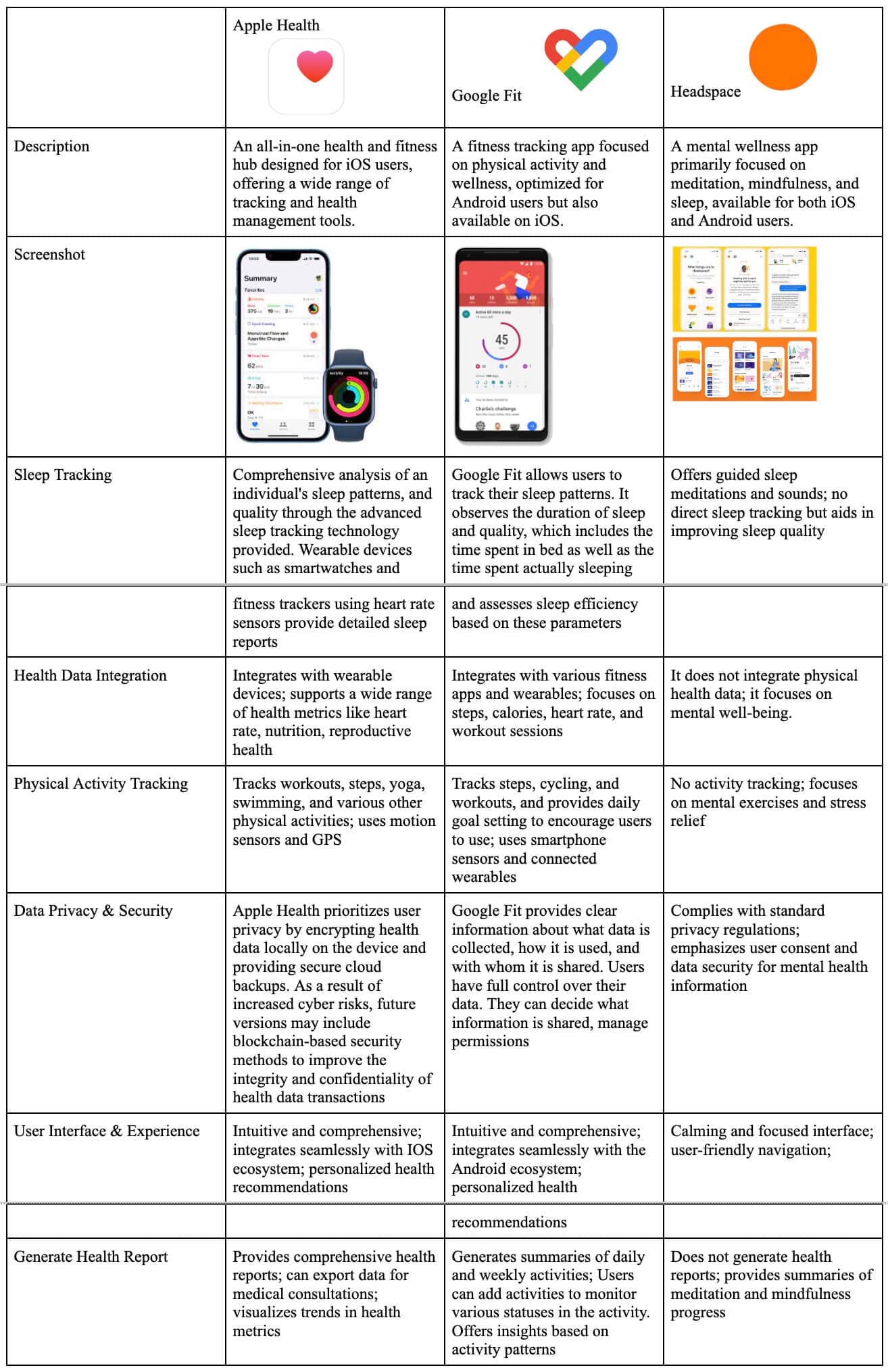
LifeTune started from a simple tension I kept hearing in conversations with health-conscious friends: they were willing to track, but most apps buried them in numbers and charts. As team lead, I framed the design problem as how to reduce data overload while still giving people enough signal to act, and our team treated it as both an HCI and systems question. After a quick competitive analysis of existing assessment and tracking tools, we ran interviews with four groups—health enthusiasts, experienced app users, developers of health tech, and self-identified “tech-haters”—to understand not just what they logged, but where current tools broke down in their everyday routines.
Across these interviews, a few patterns kept resurfacing: people wanted someone to “just tell me what to eat” instead of counting every calorie; sleep tools that could explain patterns without demanding new rituals; feedback that celebrated progress instead of nagging; and mental-health support that translated mood logs into concrete suggestions. I synthesized these into a set of design commitments: simplify complex data into a single health score with clear levers, fit into existing routines rather than invent new ones, and motivate through visible progress while still acknowledging emotional state.
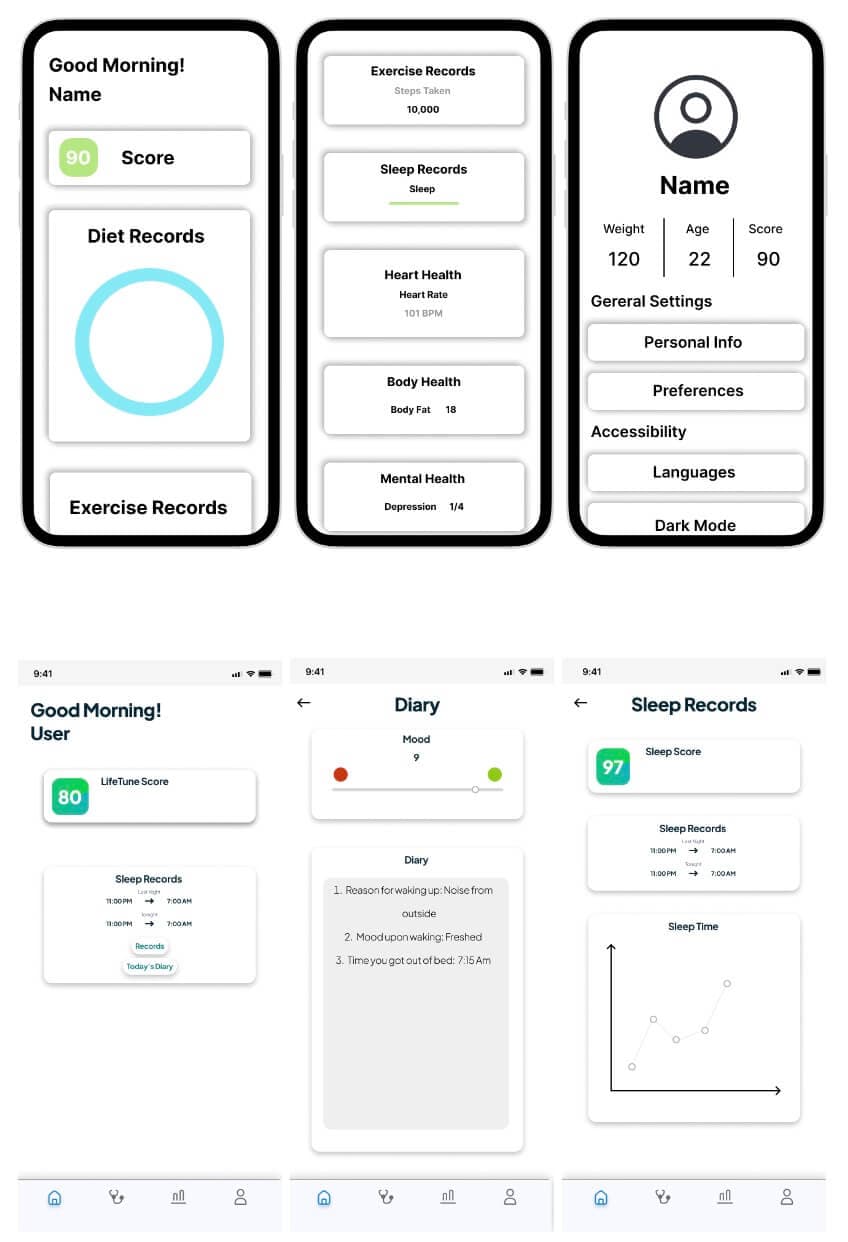
On the technical side, I translated these commitments into an end-to-end SwiftUI app. LifeTune aggregates inputs on activity, nutrition, sleep, and mood into a composite score that updates as users log small actions—a short walk, a better meal choice—so the interface can show how each decision moves the needle. The UI uses a compact, card-based layout and gentle visual cues instead of dense dashboards, and the recommendation layer surfaces a small set of next steps rather than long to-do lists. I iterated from mid-fidelity flows to high-fidelity prototypes and finally a working iOS implementation, revising interactions whenever testers reported confusion or found themselves ignoring features. The result is less a numbers app and more a health companion that tries to make “what should I do next?” legible for people at very different levels of comfort with health tech.
2 Selected visuals